
Significant portion of the funds used to fuel urban demand have become illegal and inoperative.

There's a straightforward relationship between economic activity and power consumption. If economic activity increases, so does power consumption. Since the latest GDP (gross domestic product) data indicates India's growth rates exceeded expectations in the second half if the 2022-23 financial year (H2FY23) and GDP estimates of FY24 are strong, we would expect power consumption to rise as indeed it has. There is also a direct relationship between power consumption and National Thermal Power Corporation or NTPC's results since the public sector undertaking (PSU) is the largest power generator in India.

The headline for corporate profit growth has been very encouraging in the July-September quarter (Q2) of 2023-24 (FY24), with the combined net profit of listed companies up by 38 per cent year-on-year. However, the earnings distribution has been very lopsided, with most of the growth coming from public-sector oil-marketing companies (OMCs), banks, non-bank lenders, automobile (auto) companies, and cement producers. By comparison, companies from information technology services, fast-moving consumer goods (FMCG), retail, and consumer durables were disappointed, experiencing a sharp slowdown in net sales growth and a relatively muted increase in reported net profit.

The Centre for Monitoring Indian Economy (CMIE) has lowered its growth forecast to 6 per cent, from 6.2 per cent projected earlier, for this fiscal, owing to the delay in recovery in industrial sector and the fall in mining, manufacturing and construction segments.

While the corporate sector has benefited from massive capital expenditure, leading to sky-rocketing stock prices, investors would do well to keep an eye on the macroeconomic picture and government finances, not just corporate profits, for signs of trouble, alerts Debashis Basu.

Exceptions were made for ultra-mega power plants, such as the one at Sasan, which the court observed were not under consideration, and for coal blocks attached to the power and steel companies controlled by the central government.

The absence of any recovery in investment is underlined by the capital goods sector.

With the manufacturing sector gearing up, India's industrial growth improved to 5 per cent in the first two months of this year as against 4.1 per cent in the previous year, despite mining and electricity sectors performing poorly.\n\n\n\n

Essar Steel aims to participate in the indigenisation of products used in naval defence

Output of the manufacturing sector, which constitutes over 75 per cent of the index, rose 8.5 per cent in January, compared to 8.1 per cent in the same month last year.
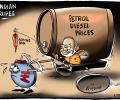
Retail inflation inches up to 3.77%; IIP growth dips to 3-month low

The government also increased the power of the FIPB.
Stating that the forthcoming elections will delay the reform process and hurt growth, international rating agency Moody's on Monday said it expects growth to pick up to only 5.5 per cent in FY15.

Essar group on Friday announced the signing of a USD 2.4 billion (Rs 19,000 crore) deal to sell certain ports and power infrastructure to ArcelorMittal Nippon Steel in one of the largest post-pandemic merger and acquisition deals in India. In a statement, the Ruia-run firm said the deal also envisages a 50-50 joint venture between Essar and ArcelorMittal for building a 4 million tonnes a year LNG import terminal at Hazira in Gujarat. Without giving details, it only identified certain ports and power infrastructure that are primarily captive to operations of the Hazira steel plant, which was acquired by ArcelorMittal Nippon Steel (AM/NS) in 2018-19, as part of the deal.
India's industrial production rose 4.9 per cent year-on-year in April, the first month of the current financial year, the official Central Statistical Organisation said on Thursday.

C Rangarajan, chairman, Prime Minister's Economic Advisory Council tells Business Standard that the measures taken by the government will lead to economic growth of at least 6 per cent in FY14 against a decadal-low growth of 5 per cent in FY13.
For April-July period, the output went up by 9.6 per cent against 10.6 per cent.
The country's industrial growth shot up to 14.4 per cent in November 2006, the fastest in more than a decade, on the back of impressive performance of manufacturing sector and a rebound in mining production.

India's economic growth slowed to 7 per cent in the three months through June from 7.5 per cent in the previous quarter

RE of GDP for 2015-16 show that the economy grew 7.9% in 2015-16, rather than the earlier estimate of 7.6 per cent.

Large sectors such as metals, mining, machinery, and transportation have seen a decline.

The internals of the food inflation are worrying, given a broad-based uptick across categories that tend to be sticky, such as proteins, and a narrower-than-expected reduction in inflation for vegetables.
After contracting for the first time in 15 years in October, industrial production again crashed by two per cent in December against a growth rate of a whopping 8 per cent a year ago despite a stimulus package announced by the government to boost sagging demand.

Supported by slightly stronger global growth, improving export competitiveness and implementation of recently approved investment projects, India's growth is expected to recover from 4.4 per cent in 2013 to 5.4 per cent in 2014, the IMF said.
India's economic growth rate rose to an impressive 8.2 per cent during financial year 2003-04 as against 3.7 per cent GDP growth registered in the previous fiscal.

The recent surge in crude oil prices could shave off the gains made by India Inc in profit margins in the past few quarters. Worse, it comes at a time when consumer demand in the country is slipping and major global economies are witnessing a slowdown. A back-of-the-envelope calculation suggests that the margin expansion accounted for three-fourths of the rise in the listed firms' operating profit between the April-June quarter (Q1) of FY23 and Q1FY24, and only a quarter of profits gains came from revenue growth.

The PM-elect wants to fix the coal sector; cut coal imports by boosting output.
Output of consumer durables fell to 3.1 per cent in the first month of this calendar year, against 5.3 per cent growth in the same month last year. In the April-January period production declined to 1.7 per cent, against 10.6 per cent growth in the same period last fiscal. Growth in manufacturing output, which has an overwhelming weight in the IIP, slipped to 5.9 per cent in January, against 12.3 per cent, electricity generation fell to 3.3 per cent, against 8.3 per cent.

According to the Central Statistics Office data, the jump in the retail inflation based on Consumer Price Index was mainly due to rise in prices of kitchen items like vegetables, meat and fish.
India's industrial production rose by 7.1 per cent in November 2022 after contracting in October, according to official data released on Thursday. The Index of Industrial Production (IIP) grew by 1 per cent in November 2021.
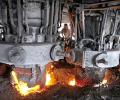
India's industrial production shrunk for the third straight month in December, dragged down by weak investment and consumer demand and pointing to continued sluggishness in Asia's third-largest economy.

Economists surveyed by Reuters had forecast a 0.5 per cent growth in output

Retail inflation remained above the RBI's comfort level for the second consecutive month despite slipping slightly to 6.26 per cent in June while the factory output recorded a growth of 29.3 per cent in May, mainly on account of the base effect, the government data showed. The marginal slippage in the Consumer Price Index (CPI)-based inflation was noticed despite little firmness witnessed in the food inflation which inched up to 5.15 per cent in June from 5.01 per cent a month ago. Retail inflation based on Consumer Price Index (CPI) was 6.3 per cent in May 2021 and 6.23 per cent in June 2020.
On a cumulative basis, the Index of Industrial Production (IIP) for the first quarter this fiscal grew by 10.3 per cent as compared to 7.7 per cent in the year-ago period, according to the official figures released on Friday.

Spotlight likely on cement, metals, road cos

The Finance Ministry expects the economic growth in the current fiscal to improve to 5.5 per cent from 5 per cent last year on back of likely pick up in agricultural output on account of good monsoon rains.

Brokerages expect India Inc to report an upturn in earnings for the March quarter of 2022-23, after a relatively muted showing in the previous two quarters. This growth is expected to be led by banking, financial services and insurance (BFSI) companies, FMCG firms, and automobile makers. The combined net profit of the Nifty50 companies (excluding Adani Enterprises) is expected to have grown 15.6 per cent to Rs 1.77 trillion in Q4FY23, from Rs 1.53 trillion a year ago.

Gross non-performing assets in system have grown to 4.1 per cent in FY14 from 3.4 per cent a year ago

'India has benefited from lower oil prices and remains the fastest-growing large economy in the world.'
